

I would like to offer a contemporary perspective on recent patient reports from the cluster headache community alongside my own experience with nutritional interventions for CH. This draws on a range of emerging research to explore how modulation of the gut microbiota, more so than any single diet, may represent a novel therapeutic target for cluster headache in the future.
As a CH patient, I will attempt to integrate the converging lines of evidence supporting this hypothesis, including a case report from the grey literature illustrating what a targeted microbiome-based approach might look like in practice. I will conclude with some thoughts on what I consider a genuinely fascinating area of emerging science.
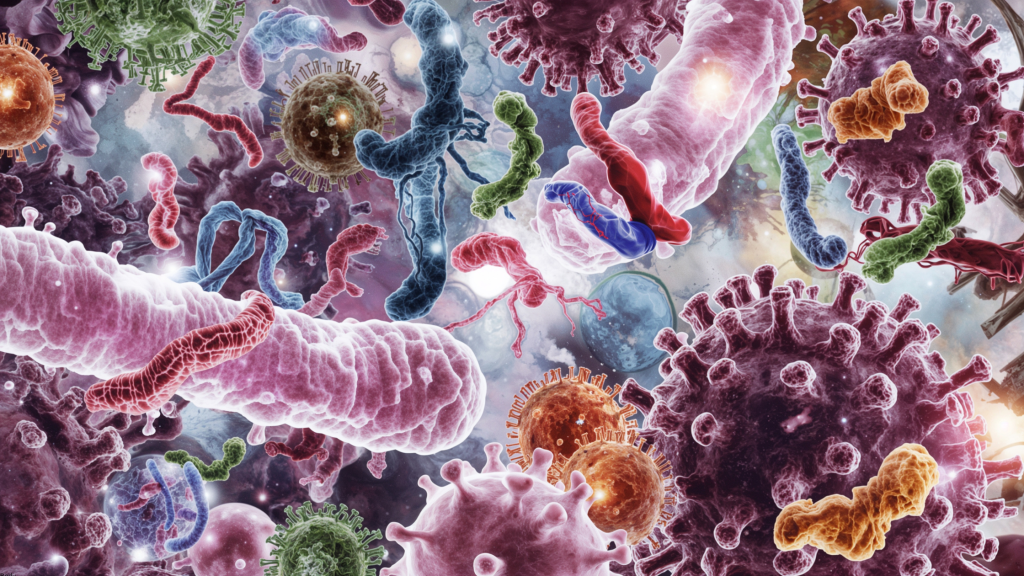
The Human Microbiome: We Are More Microbial Than We Think
The human genome encodes between 20,000 and 25,000 genes. Our collective microbial genome, comprised of the trillions of microbes that inhabit our bodies, contains an estimated 3 to 4 million genes. The gut microbiota is a vast community of bacteria, fungi, viruses and archaea that colonise the gastrointestinal tract, with the highest concentration found in the colon.
The diversity of this community is shaped by diet, environment, gut motility, autonomic tone, antibiotic exposure, previous infection, vitamin D3 status and, as emerging research suggests, psychedelic compounds. The microbiota ferments dietary fibre into short-chain fatty acids (SCFAs) such as acetate, propionate and butyrate. It also synthesises vitamins including K and several B-group vitamins, amino acid derivatives like indole and GABA, and secondary bile acids that regulate metabolism and immune function.
Together these microbes and their metabolites play a foundational role in maintaining gut integrity, modulating inflammation and supporting overall health.
Dysbiosis: When Balance Is Disrupted
When the microbial community is in balance, the relationship between host and microbiota is mutually beneficial. We nourish the microbes and they nourish us. When this balance is disrupted, a state called dysbiosis, disease may follow.
Dysbiosis can degrade the mucin layer, the protective mucous coating that lines the gut epithelium. Once this barrier is weakened, the tight junctions that maintain epithelial integrity can be compromised, allowing toxins to translocate from the gut into the bloodstream. A notable example is lipopolysaccharide (LPS), a component of gram-negative bacteria that engages the TLR4 receptor on innate immune cells, activating the transcription factor NF-κB. This in turn upregulates pro-inflammatory cytokines including IL-1β and TNF-α, contributing to the process commonly known as leaky gut syndrome.
What Migraine Research Tells Us About Neuroinflammation
Cluster headache and migraine are clinically distinct conditions, but they share overlapping mechanisms including activation of the trigeminovascular system, neurogenic inflammation and responsiveness to triptans and anti-CGRP monoclonal antibodies. Both conditions also exhibit cyclical patterns and heightened sensitivity within pain processing networks.
Given the larger migraine literature, it is useful to draw cautious insights from it where mechanisms may be shared. Recent research has shifted the understanding of migraine from a neurovascular disorder toward a systemic inflammatory condition modulated by the gut-brain-immune axis.
He et al. (2023) confirmed a causal relationship between gut microbial composition and migraine risk, identifying protective taxa such as Bifidobacteriales and pathogenic associations with Anaerotruncus and Clostridium genera. This provided some of the first robust evidence that microbiota composition can directly influence migraine susceptibility. A 2024 study by Vuralli and colleagues found elevated serum LPS, VE-cadherin, HMGB1 and IL-6 in chronic migraine patients with medication overuse, supporting a leaky-gut inflammatory phenotype linked to trigeminal sensitisation.
Reviews and meta-analyses converge on a consistent picture: people with migraine show lower microbial diversity, depletion of SCFA-producing species such as Faecalibacterium and Roseburia, and relative overgrowth of pro-inflammatory species. Grodzka and Domitrz (2025) conducted a meta-analysis showing probiotic supplementation reduced migraine frequency. Kappéter et al. (2023) proposed fecal microbiota transplantation as a means of restoring microbial balance and normalising the inflammatory mediators implicated in migraine chronification.
Emerging Inflammatory Signatures in Cluster Headache
Comparable microbiome studies in CH are largely absent, but new evidence is identifying a persistent inflammatory signature in the condition. In peripheral blood, Lund et al. (2025) found distinct cytokine profiles across all CH subtypes, with oncostatin M (OSM), an IL-6 family cytokine, elevated in chronic CH, episodic CH in-cycle and episodic CH in remission.
In cerebrospinal fluid, Ran et al. (2024) demonstrated higher chemokine concentrations with a serum-to-CSF gradient, concentrating inflammation within the central nervous system, present both during active cycle and remission. PACAP-38 has also been found to be elevated in CH compared with controls, further supporting sustained neuroimmune activation even between attacks.
While the upstream driver of these elevated markers has not yet been linked to dysbiosis, these findings collectively suggest that CH is a condition underpinned by ongoing neuroinflammation rather than a series of isolated pain events.
Ketogenic Diet in Cluster Headache: A Remarkable Finding
A 2018 case-control study by Di Lorenzo and colleagues examined the effects of a modified Atkins ketogenic diet in 18 chronic cluster headache patients who had not responded to standard preventive treatments. Fifteen participants responded favourably: 11 achieved sustained pain-free remission and 12 chose to remain on the diet after the study concluded.
Although the mechanism was not explored in the study, it is my view that the ketogenic diet's benefit in CH may extend beyond the metabolic effects of ketone production to include modulation of the gut microbiota and its associated inflammatory milieu. To my knowledge this remains the only dietary intervention study in CH, and while the sample size was small, the findings were remarkable.
A Moment to Acknowledge Patient-Led Science
Before moving into the next sections, I want to pause and acknowledge something important. Few examples illustrate the power of patient-led initiatives better than what the cluster headache community has achieved. Out of necessity and sheer persistence, patients have effectively conducted some of the most successful citizen science projects in existence.
From the early exploration of psychedelic therapy to the development of the Vitamin D3 Anti-Inflammatory Regimen, each step has been driven by individuals determined to find solutions where few existed. These efforts have produced practical, effective treatment tools that continue to change lives. Not all heroes wear capes.
Where Vitamin D3 and Psilocybin Converge
What I find particularly compelling is that both of these patient-discovered therapies, psychedelic compounds and the Vitamin D3 Regimen, may exert part of their therapeutic effect through interactions with the gut microbiota. At the same time, their variable efficacy from one patient to another may be influenced by the baseline state and diversity of that patient's microbiome.
This bidirectional relationship, in which treatment both shapes and is shaped by the microbiota, may help explain why some people achieve complete remission while others experience only partial or temporary relief. In the sections below I will examine the evidence for how each therapy intersects with the gut.
Vitamin D3, the Gut and the Microbiome
For almost a decade, the Vitamin D3 Anti-Inflammatory Regimen has kept me mostly free from cluster headache attacks. Beyond its role in calcium homeostasis, vitamin D3 plays a significant role in maintaining gastrointestinal health. The active form, 1,25-dihydroxyvitamin D3, binds to the Vitamin D Receptor (VDR), which is expressed throughout the intestinal epithelium and immune cells. Through this signalling pathway, vitamin D3 influences epithelial integrity, microbial diversity and immune regulation (Vemulapalli & Thomas, 2025).
In refining the original regimen, Pete Batcheller incorporated a B-complex, taking inspiration from Gominak's work linking vitamin D restoration to improved sleep and gut function through the microbiota's production of B vitamins (Gominak, 2016). Gominak proposes that vitamin D3 and the microbiota exist in a symbiotic relationship: vitamin D3 supports the host environment necessary for microbial balance while a healthy microbiota produces essential cofactors for neuronal and immune health.
Charoenngam et al. (2020) demonstrated that vitamin D3 supplementation shifts the microbiota toward a less inflammatory profile, increasing beneficial commensal species such as Bacteroides while reducing pathogenic species. In terms of gut barrier function, vitamin D3 upregulates tight-junction proteins such as claudins and occludins while lowering zonulin expression, a key marker of intestinal permeability. By strengthening tight junctions, vitamin D3 may reduce the translocation of bacterial endotoxins like LPS into systemic circulation (Fedele et al., 2018; Stio et al., 2016).
Vitamin D3 also modulates immune responses by inhibiting NF-κB activation, reducing pro-inflammatory cytokine production and supporting T regulatory cell function. Importantly, as demonstrated by Holick and colleagues in Scientific Reports (2019), the genomic actions of vitamin D3 are dose and blood-level responsive: higher 25(OH)D concentrations produce broader transcriptional changes across hundreds of genes involved in immune regulation.
While vitamin D3 almost certainly acts on receptors in the trigeminal ganglion and hypothalamus, these peripheral effects within the gut may play an underappreciated role in the therapeutic efficacy of the regimen.
Psilocybin and the Gut-Brain Axis
Intriguing new research suggests that the therapeutic effects of psilocybin may be partly mediated through interactions with the gut microbiota. While its primary described mechanism involves serotonergic receptor modulation, emerging evidence shows that psilocybin also exerts systemic effects on inflammation, immune signalling, intestinal barrier integrity and microbial composition.
Wang et al. (2025) provide a thoughtful synthesis of this evolving picture in ACS Chemical Neuroscience, suggesting that psychedelics including psilocybin extend beyond cortical serotonergic circuits to modulate the gut-brain axis. Their viewpoint positions psilocybin as both neuroactive and immunomodulatory, potentially influencing inflammation via NF-κB-mediated cytokine pathways.
Zanikov et al. (2024) demonstrated in a mouse model of colitis that psilocybin reduced gut-driven neuroinflammation and lowered expression of inflammatory cytokines IL-1β, IL-6 and COX-2 in brain tissue. This links intestinal inflammation directly to a central inflammatory response and confirms that psilocybin's anti-inflammatory effects extend along the gut-brain axis rather than within the brain alone. Complementary in vitro work in human macrophages shows dose-dependent suppression of LPS-induced cytokines via NF-κB modulation.
Kelly and Clarke (2023) introduced the term "psilocybiome" as a framework to describe the bidirectional relationship between psychedelics and the microbiota-gut-brain axis. They propose that microbial diversity and metabolism influence every phase of psychedelic therapy, from preparation and the acute experience through to integration. Caspani et al. (2024) build on this by exploring psilocybin's potential antimicrobial effects and how it may reshape gut ecology.
This research offers a fresh perspective on the variable response patterns observed within the CH community's collective experience with psychedelic therapy. It seems reasonable to suspect that interventions which restore microbial balance and support gut integrity may enhance the therapeutic window for psilocybin.
A Clinical Case Report: Resolving Dysbiosis to Restore Vitamin D Function
A 2023 case report by Beltran and Guimarães describes the successful treatment of a psoriasis patient refractory to conventional therapies using a combined approach of an anti-inflammatory diet, high-dose vitamin D3 and targeted herbal antimicrobials.
The diagnostic workup used the GI-MAP, a DNA-based stool test that identifies bacterial, fungal and parasitic taxa alongside markers of gut inflammation and intestinal permeability by quantitative PCR. This revealed small intestinal fungal overgrowth (SIFO) driven by Candida albicans, informing the selection of oregano oil as an antifungal agent alongside curcumin for its capacity to inhibit NF-κB-mediated inflammation and upregulate VDR expression in epithelial and immune cells.
Following five months of intervention, immunofluorescence analysis of VDR expression in skin biopsies revealed upregulation of receptor density compared with baseline, correlating with full clinical remission. This finding parallels the argument advanced in Beltran's companion paper on vitamin D receptor renewal, which identifies the suppression of VDR by LPS, mycotoxins and inflammatory cytokines as a key driver of vitamin D resistance in chronic inflammatory disease. By resolving dysbiosis and improving gut integrity, the intervention removed the upstream inflammatory blockade to VDR transcription.
This case illustrates an important principle: in some patients, improving the gut environment may be a prerequisite for vitamin D3 to function effectively at the receptor level.
Conclusion: An Exciting but Early-Stage Hypothesis
Cluster headache, long regarded as the most severe pain condition known to medicine, may find part of its explanation not in the brain alone but in the microbial world that sustains it. As our understanding of the gut-brain-immune axis deepens, the idea that dysbiosis and intestinal permeability may act as upstream drivers of neuroinflammation in CH becomes increasingly difficult to dismiss.
The literature in CH remains in its infancy and honest caveats are warranted. The ketogenic diet results are impressive but need larger controlled trials. The Vitamin D3 Regimen works for many but still lacks clinical validation in CH specifically. Psilocybin's ties to the microbiome are genuinely intriguing but mostly preclinical. All three options are available for patients to explore at their own discretion and under appropriate guidance.
It is early days. What we have is a compelling hypothesis rather than settled science for CH specifically. But patents have already been filed for microbiome-modulating technologies targeting headache disorders, such as US 9,987,224 B2, which describes methods for altering gut microbiota composition to influence neurological outcomes including migraine and cluster headache. That development signals a growing recognition among researchers and investors that the gut is a serious therapeutic target for these conditions.
I hope this has been a useful overview of where the science currently sits. I welcome your thoughts, comments and questions. It is an exciting time and I look forward to seeing what future research reveals about cluster headache and the microbiome.
References
Migraine
- Vuralli, D., et al. (2024). Lipopolysaccharide, VE-cadherin, HMGB1 and HIF-1α are elevated in chronic migraine with MOH: evidence of leaky gut/inflammation. J Headache Pain. Read article
- He, Q., Zhang, Y. and Li, R. (2023). A causal effect of gut microbiota in the development of migraine. J Headache Pain. Read article
- Grodzka, O. and Domitrz, I. (2025). Gut microbiota, probiotics, and migraine: a clinical review and meta-analysis. Journal of Oral & Facial Pain and Headache. Read article
- Kappéter, Á., et al. (2023). Migraine as a disease associated with dysbiosis and possible therapy with fecal microbiota transplantation. Biomedicines. Read article
Cluster Headache
- Lund, N.L.T., et al. (2025). Distinct alterations of inflammatory biomarkers in cluster headache: a case-control study. Annals of Neurology. Read article
- Ran, C., et al. (2024). Elevated cytokine levels in the central nervous system of patients with cluster headache. J Headache Pain. Read article
- Søborg, M.L.K., et al. (2025). PACAP-38 in cluster headache: a prospective, case-control study of a potential treatment target. Eur J Neurol. Read article
Ketogenic Diet
- Di Lorenzo, C., et al. (2018). Efficacy of Modified Atkins Ketogenic Diet in Chronic Cluster Headache: An Open-Label, Single-Arm Clinical Trial. Frontiers in Neurology. Read article
Vitamin D3
- Vemulapalli, R. and Thomas, A. (2025). The Role of Vitamin D in Gastrointestinal Homeostasis and Gut Inflammation. Int. J. Molecular Sciences. Read article
- Gominak, S.C. (2016). Vitamin D deficiency changes the intestinal microbiome reducing B-vitamin production in the host: a hypothesis explaining chronic sleep disorder. Medical Hypotheses. Read article
- Charoenngam, N., Shirvani, A., Holick, M.F. (2020). The Effect of Various Doses of Oral Vitamin D3 Supplementation on Gut Microbiota in Healthy Adults. Anticancer Research. Read article
- Stio, M., et al. (2016). Vitamin D regulates the tight-junction protein expression in active ulcerative colitis. Scand J Gastroenterol. Read article
- Scricciolo, A., et al. (2018). Vitamin D3 Versus Gliadin: A Battle to the Last Tight Junction. Digestive Diseases and Sciences. Read article
- Shirvani, A., et al. (2019). Disassociation of vitamin D's calcemic and non-calcemic genomic activity and individual responsiveness. Scientific Reports. Read article
Psychedelics
- Wang, X., Li, H. and Zhou, Z. (2025). Psychedelics and the Gut Microbiome: Unraveling the Interplay and Therapeutic Implication. ACS Chemical Neuroscience. Read article
- Zanikov, T., et al. (2024). Psilocybin and eugenol prevent DSS-induced neuroinflammation in mice. Biocatalysis and Agricultural Biotechnology. Read article
- Caspani, et al. (2024). Mind over matter: the microbial mindscapes of psychedelics and the gut-brain axis. Progress in Neuro-Psychopharmacology & Biological Psychiatry. Read article
- Kelly, J.R. and Clarke, G. (2023). Seeking the Psilocybiome: Psychedelics meet the microbiota-gut-brain axis. International Journal of Psychopharmacology. Read article
Case Report & Other
- Beltran, E.P. and Guimarães, G. (2023). High-dose vitamin D3, anti-inflammatory diet and targeted antimicrobials in psoriasis vulgaris. Zenodo (grey literature). Read report
- Beltran, E.P. (2023). Vitamin D Receptor Renewal Through Anti-inflammatory Diet. ResearchGate. Read paper
- US 9,987,224 B2 (2018). Method and system for preventing migraine headaches, cluster headaches and dizziness. View patent
Leave a Comment